The most useful change in how I work this year isn’t a new app. It’s a habit. When I’m working with AI agents now, I decide the outcome I want, write it down clearly, and let the agent handle the how. I stay on the what and the why. The agent does the rest, after the plan is clear.
Last month gave me a clean example of why that matters. Here’s the story.
The job: move a live site to my own hardware
I run a small homelab at home, my own machines, where I host web apps and tinker. (Yes, I’m a minimalist with too many computers. I’ve made peace with it.) Once in a while I like to prove a more open internet is still possible: that you don’t have to put everything with the handful of giant providers that run most of the cloud; you can run your own slice. So I set myself a real test.
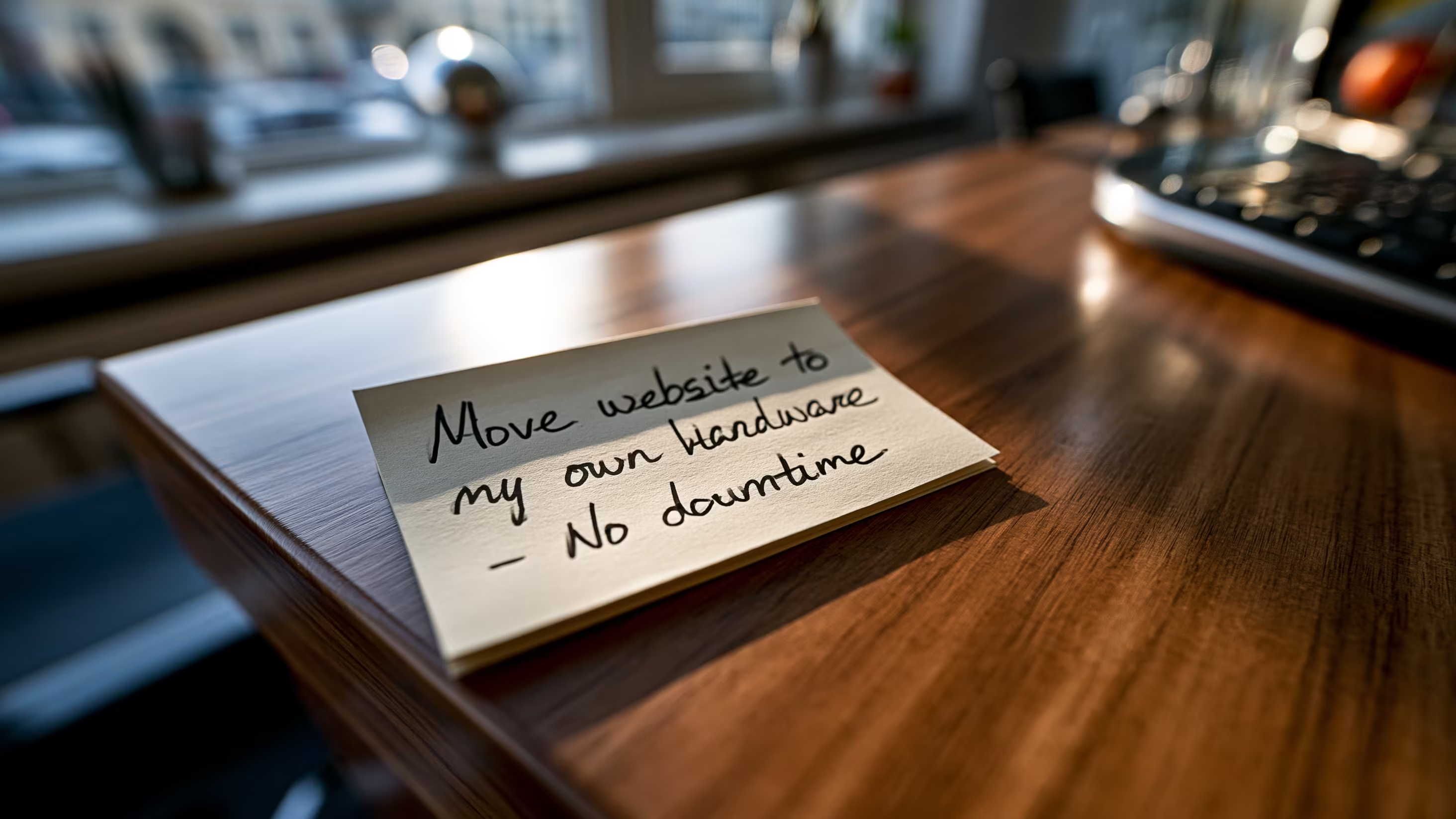
The outcome I wanted: take orantesgallery.com, a live site, off a big cloud provider and move it onto my own hardware. No downtime.
That was the whole brief I started with. One clear outcome.
What working with AI agents actually looks like
The old way would have been me, a dozen browser tabs, and a long night pasting terminal commands I’d half-forgotten by morning. Configure the server. Wrangle the backups. Hit a wall. Search. Try again.
What actually happened: I handed over the outcome and stayed at the level that needs my judgment. And it wasn’t all smooth. I started with a trial run: the agent helped configure the server and walked the migration from the backup files, but we hit a few glitches along the way. So we worked them out together, one at a time: I’d point at what wasn’t right, the agent would adjust, we’d try again, until the whole thing ran clean from start to finish.
That made the real cutover the easy part. We’d already practiced it. The site came back up with no downtime.
I never dropped into technician mode. I stayed the person deciding what “done” looks like.
The part that actually matters
Here’s the part I keep thinking about. Once we’d ironed out every glitch, the agent documented the entire process, every step, in order, kinks already worked out. Then it turned that into a reusable skill.
So the next time I migrate a site, it isn’t a research project. The thinking is already captured, and we just use the skill.
That’s the difference between using AI as a one-off shortcut and using it the way I want to: every job leaves behind something that makes the next one faster. The work compounds.
The whole method, in one line
This is how I want to work on everything, and it’s how I work at Minimo Studio. I decide the what and the why. The AI handles the how, only after the plan is clear. The tools don’t replace the judgment; they carry it out, and they make good judgment repeatable.
It’s the same order I bring to every website: strategy first, get clear on the outcome, then let the tools build. The thinking is the part that’s mine. The execution is the part I can hand off, and document, so it never starts from scratch again.
More of this in the open as I build it.
Less noise. More clarity.